Building IatCar: What Running Our Own Product Taught Us
Article by Rostislav Georgiev
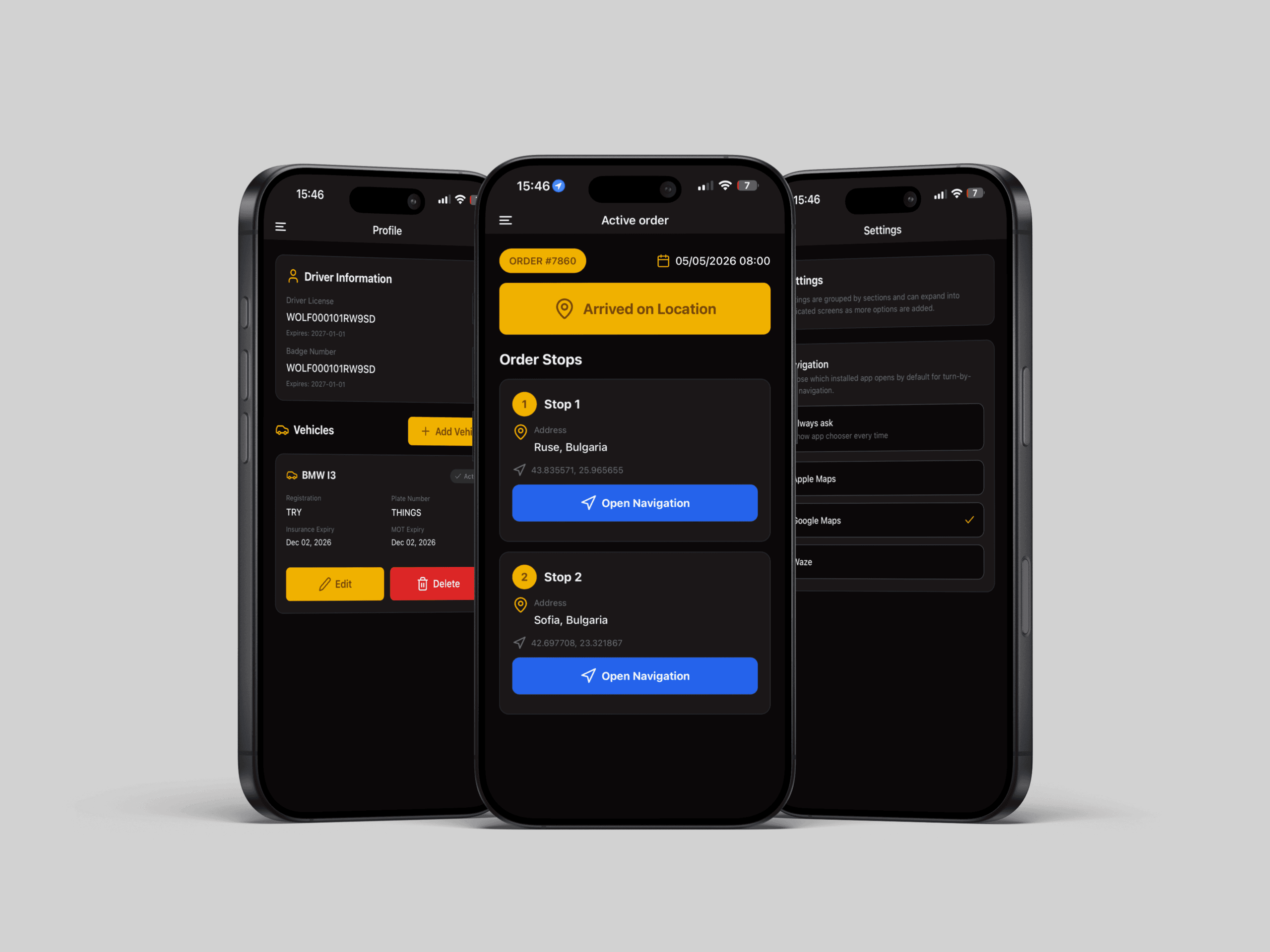
In 2024 we co-founded IatCar, a transport platform for school-transport contracts in England. Live tracking in under a second, one app for drivers and passengers, and a web platform that runs the operation. Here’s what we learned building it.
Most of our work at PixelA® is for clients. IatCar is different: it’s a product we co-founded in 2024, together with two shareholders in England, and it’s live today. Building it changed how we think about every client project, because for once, every trade-off was ours to live with.
The problem
IatCar runs school-transport contracts won at council tenders in England, for children with special educational needs. On paper it’s transport. In practice it’s a long chain of responsibility: the right driver, with valid documents, at the right address, at the right time, every school day, and a dispatcher who can see all of it at once.
When we started, none of us had worked in this industry. There was no playbook, just a lot of questions.
What we built
- Live tracking in under a second. Dispatchers see every driver on the map as it happens, not a minute later.
- One app, two interfaces. A single iOS and Android app with a driver side and a passenger side, each showing only what that person needs.
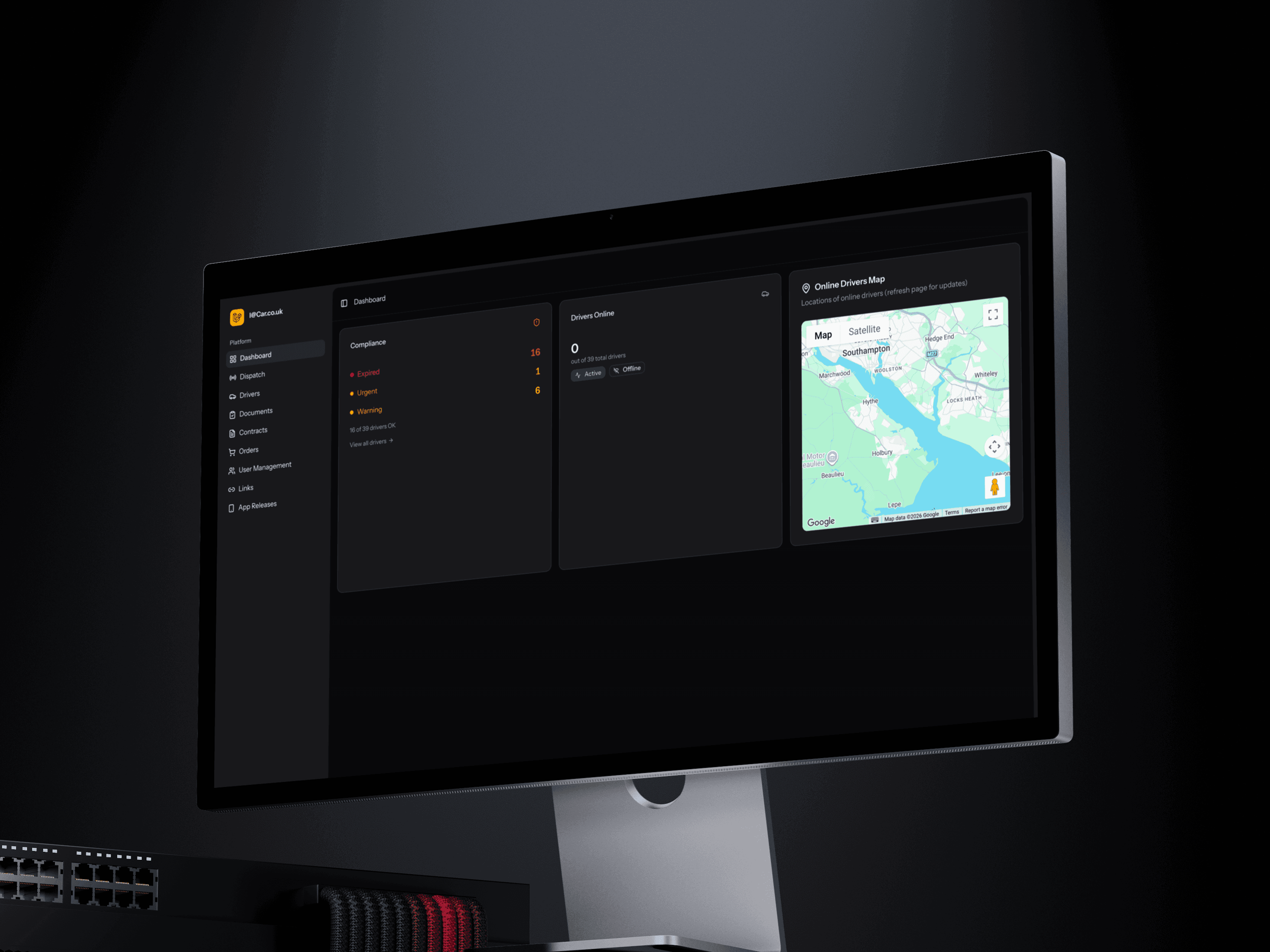
- A web platform that runs the operation. Dispatch, drivers and vehicles, contracts attached to each driver, and alerts before a document expires instead of after.
- A promo website that brings in bookings on its own.
What it taught us
Logic is the hard part, not the screens. The interface was the easy bit. Keeping three connected surfaces (the web platform, the driver side and the passenger side) in sync in real time, and making contract generation hold up as a real legal workflow, took most of the effort.
Design for the worst morning. A product like this is judged on its busiest, messiest day: a driver off sick, a road closed, a parent calling. Every screen we kept had to help someone in that moment. Everything else went.
Small teams can carry big systems. Three of us at PixelA, with Mihail Kostov on the backend and platform logic and Deyvid Bardarov on the mobile apps, built real operational infrastructure for a live business. AI-assisted development helped us move fast without cutting corners on reliability.
Owning the outcome changes the brief. When the product is yours, “nice to have” disappears quickly. That discipline is exactly what we now bring to client work: fewer features, built properly, around how people actually work.
Where it is now
The MVP went live in September 2025. Today the platform runs more than 40 drivers and over 1,000 generated contracts, and the website brings in 5+ bookings a week.
Read the full story in the IatCar case study, or tell us about your project if you’re building something similar.