IatCar
Dispatch Platform · iOS & Android App · Live Tracking
Client: IatCar
Duration: 2 years (MVP launched Sept 2025)
Year: Since 2024
Categories:
- Backend Development
- Mobile App
- Product Design
- UX/UI Design
Tools Used:
- Laravel
- PHP 8.4
- React 19
- TypeScript
- Inertia.js
- Tailwind CSS
- shadcn/ui
- Laravel Reverb
- Google Maps Platform
- React Native (Expo)
- Webflow
- Figma
- Claude
Our team mates who took part in this project



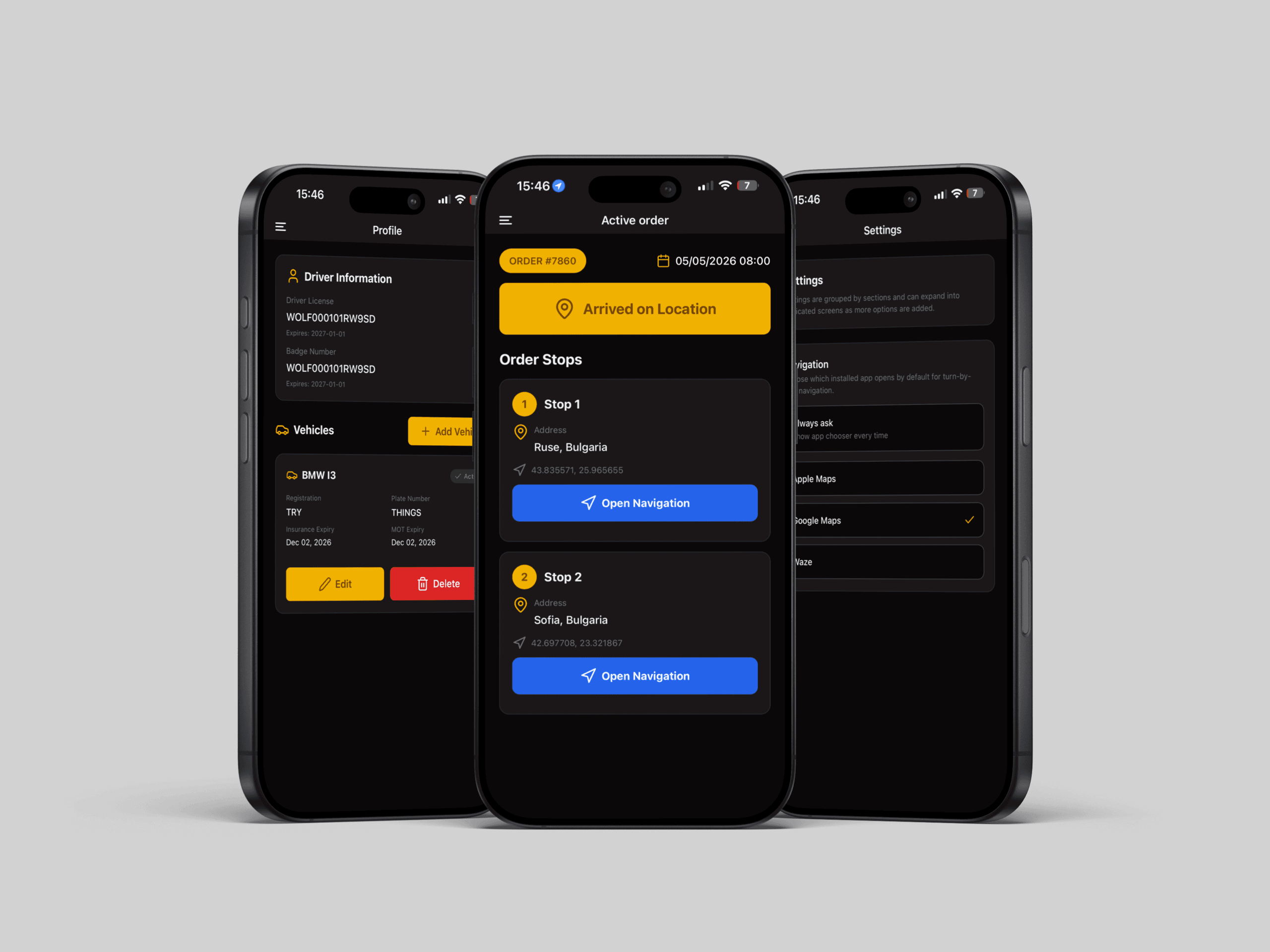
IatCar runs school transport in England for contracts won at council tenders, many for children with special educational needs. We built the whole operation as one product: a dispatch and contracts platform on the web, one app for drivers, passengers and dispatchers on iOS and Android, and live driver tracking that updates in under a second.
Co-founded product · 2024
Live in the UK

A complete transport platform for school-transport contracts won at council tenders in England, for children with special educational needs. Driver tracking in under a second, apps for drivers and parents, and a dispatch platform that runs the whole operation.
- iOS app (opens in a new tab)
- Android app (opens in a new tab)
- Dispatch & admin platform
- Website (opens in a new tab)
- Strategy
- Design
- Build
- Launch
- Scale
<1s
Live driver tracking
2 in 1
One app, driver and passenger interfaces
360°
Contracts, documents and expiry alerts



What we built
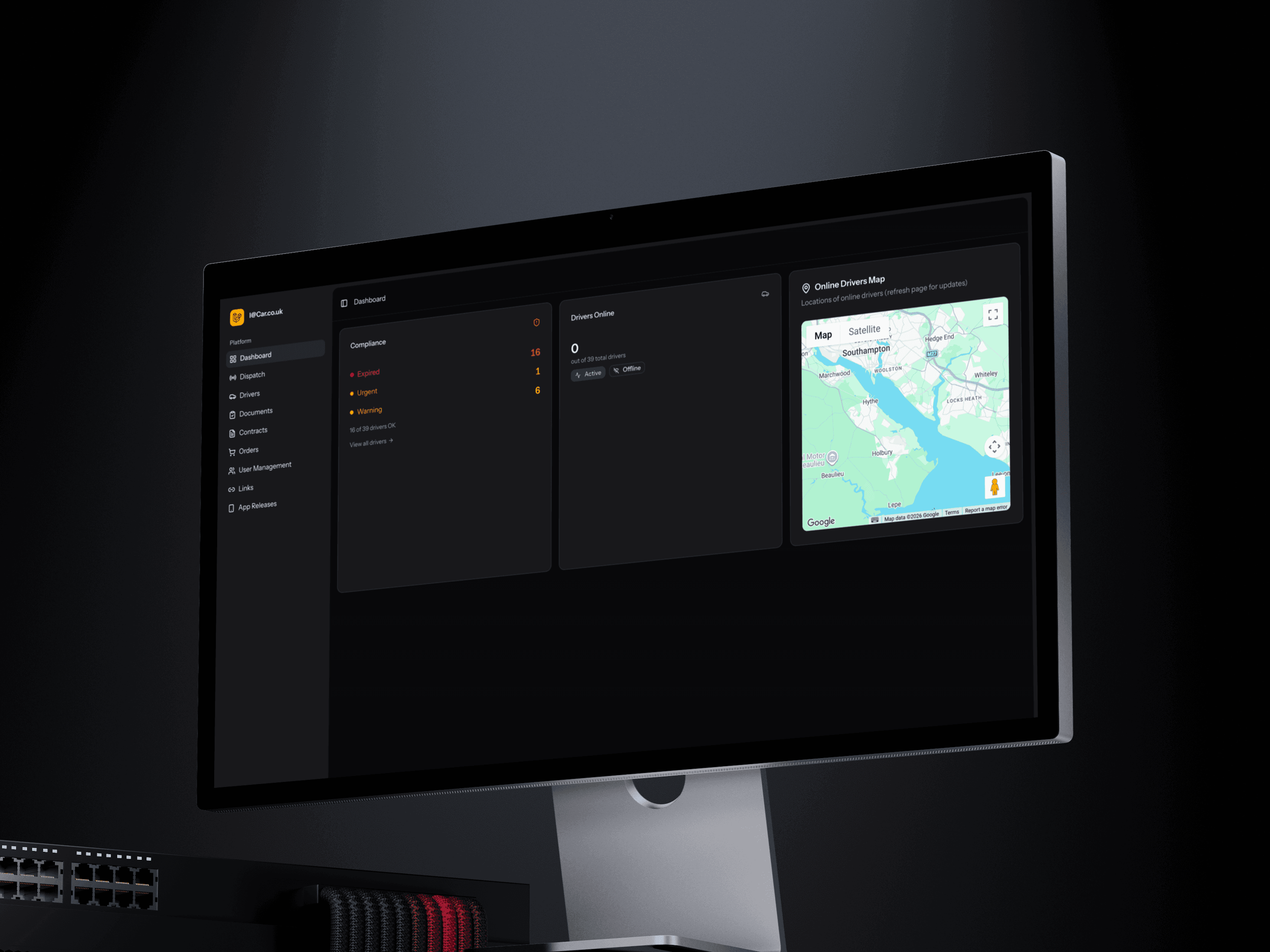
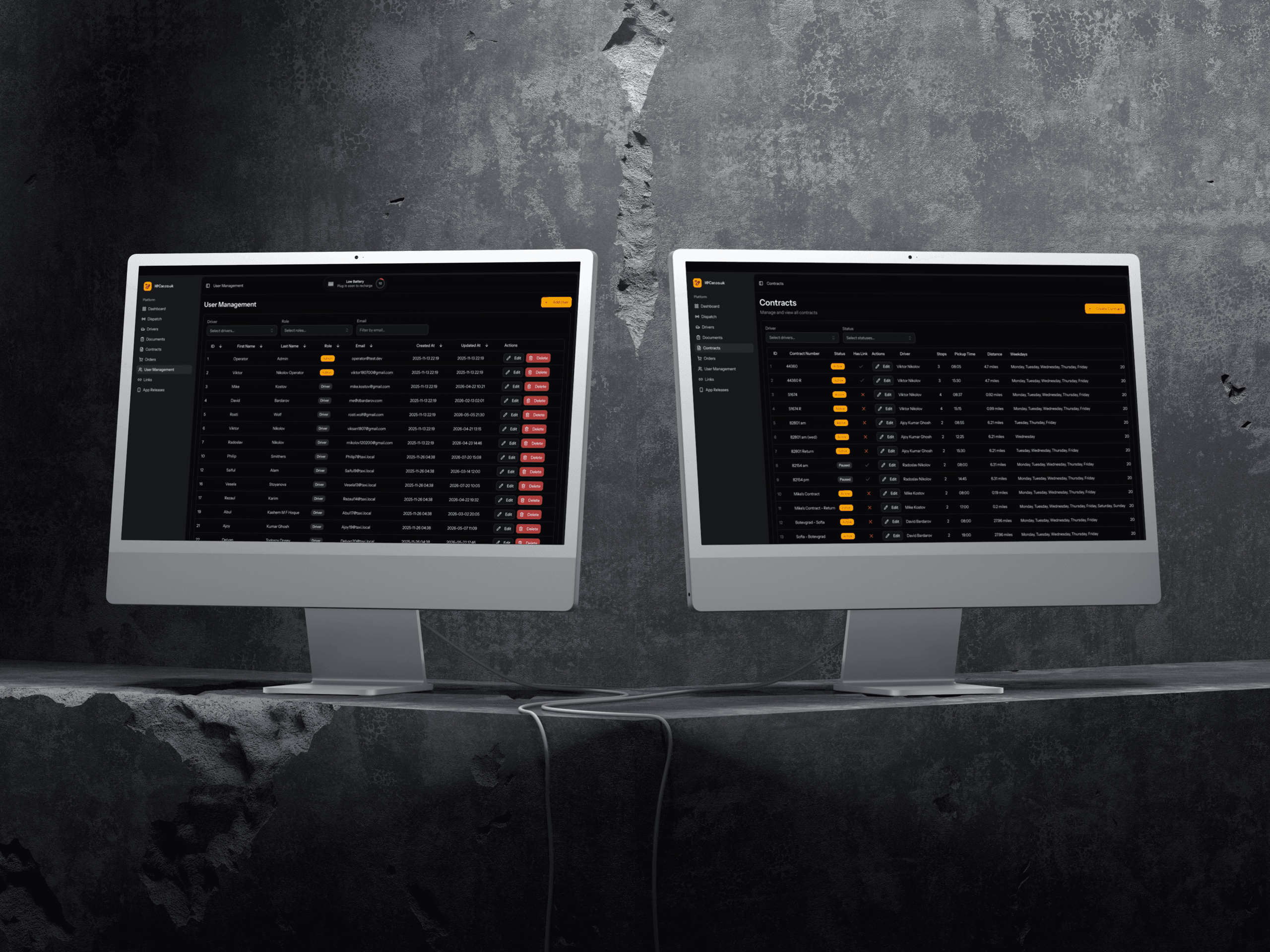
Dispatch platform (web). Dispatchers create orders, see the nearest available drivers on a live map, assign and cancel trips, and plan routes with drag-and-drop stops. Contracts, districts, drivers, vehicles and passengers are all managed in one place.
One app, three roles. The I@Car app on the App Store and Google Play has driver, passenger and dispatcher accounts. Passengers request and track rides, drivers go online, share their location and manage their vehicles, dispatchers coordinate on the move.
Live tracking. Driver positions stream to the dispatch map over WebSockets, so the office always sees where every vehicle is, in under a second.
Contracts and documents. Council contracts and their orders live in the platform. Drivers upload their documents, the office approves or rejects them, and expiry dates are tracked. Councils and schools get secure share links to follow a contract's trips without an account.
Promo website. iatcar.co.uk explains the service and brings in bookings every week.
Under the hood
Backend: Laravel on PHP 8.4, with Laravel Sanctum for web sessions and mobile tokens, a REST API for the app, and Laravel Reverb for real-time WebSockets.
Web platform: React 19 and TypeScript through Inertia.js, styled with Tailwind CSS and shadcn/ui, with Google Maps Platform for live markers, directions and route lines. Built with Vite, with light and dark mode.
Mobile app: React Native with Expo, one codebase for iOS and Android, connected to the same Laravel API.
Website: designed and built in Webflow.
Approach
We started from zero domain knowledge. The team studied how competing private-hire operators in England structured fleets, contracts, and driver workflows, then began from a demo built on an existing competitor's product before reshaping it entirely around IatCar's own operations.
Rostislav led discovery, product design, project management and the promo website in Webflow. Mihail Kostov built the Laravel backend and the React dispatch platform (contracts, geolocation, dispatch) largely solo, leaning on AI-assisted development. Deyvid Bardarov built the React Native app for iOS and Android.
Vision and Innovation
The vision was a single connected system: an operator running a full fleet without spreadsheets, phone calls, or paper contracts. Geolocation updates feed live vehicle status into the web admin, contracts are generated digitally, and drivers and customers each get an app built for their side of the job.
Identifying Unique Challenges
The real difficulty wasn't the UI. It was the logic. Three connected surfaces (dispatch platform, driver view, passenger view) had to stay in sync in real time, contract generation had to hold up as a real legal workflow, and geolocation had to stay accurate and reliable across a live, moving fleet. None of us had built any of this before, and there was no playbook to follow.
Resolving Complex Problems
Mihail carried the core complexity (backend architecture, geolocation syncing, and contract logic) largely alone, leaning on AI tooling to move fast without sacrificing reliability. Deyvid then built the React Native app for drivers, passengers and dispatchers on top of that foundation, while Rostislav kept the business requirements, the client relationship, and the timeline aligned across the whole team.
User-Centric Design
Every workflow was built around who'd actually use it. Dispatchers needed a fast way to see and manage the whole fleet. Drivers needed a simple, low-friction app for their shifts and status. Customers needed clarity: where their driver is, and when they'll arrive.
Meeting User Needs
The web admin replaced manual fleet coordination with one place to track vehicles, manage drivers, and generate contracts. The mobile apps gave drivers and customers real-time visibility neither had before.
Conclusion
IatCar's MVP went fully live in September 2025, less than a year after onboarding began. Today the platform runs more than 40 drivers and 1,000+ generated contracts, and the promo site converts 5+ bookings a week from 500+ unique visitors. It's a good example of a small team (three of us, working closely with our partners in England) building real operational infrastructure for a live business from a standing start, with no prior experience in the private-hire industry.
Check also other projects of ours


Newsletter
Stay ahead
with PixelA®
Join our newsletter for fresh insights, trends, and stories that fuel creativity and innovation.