Why Drivers Crack Car Windows Even with the AC On
Article by Rostislav Georgiev
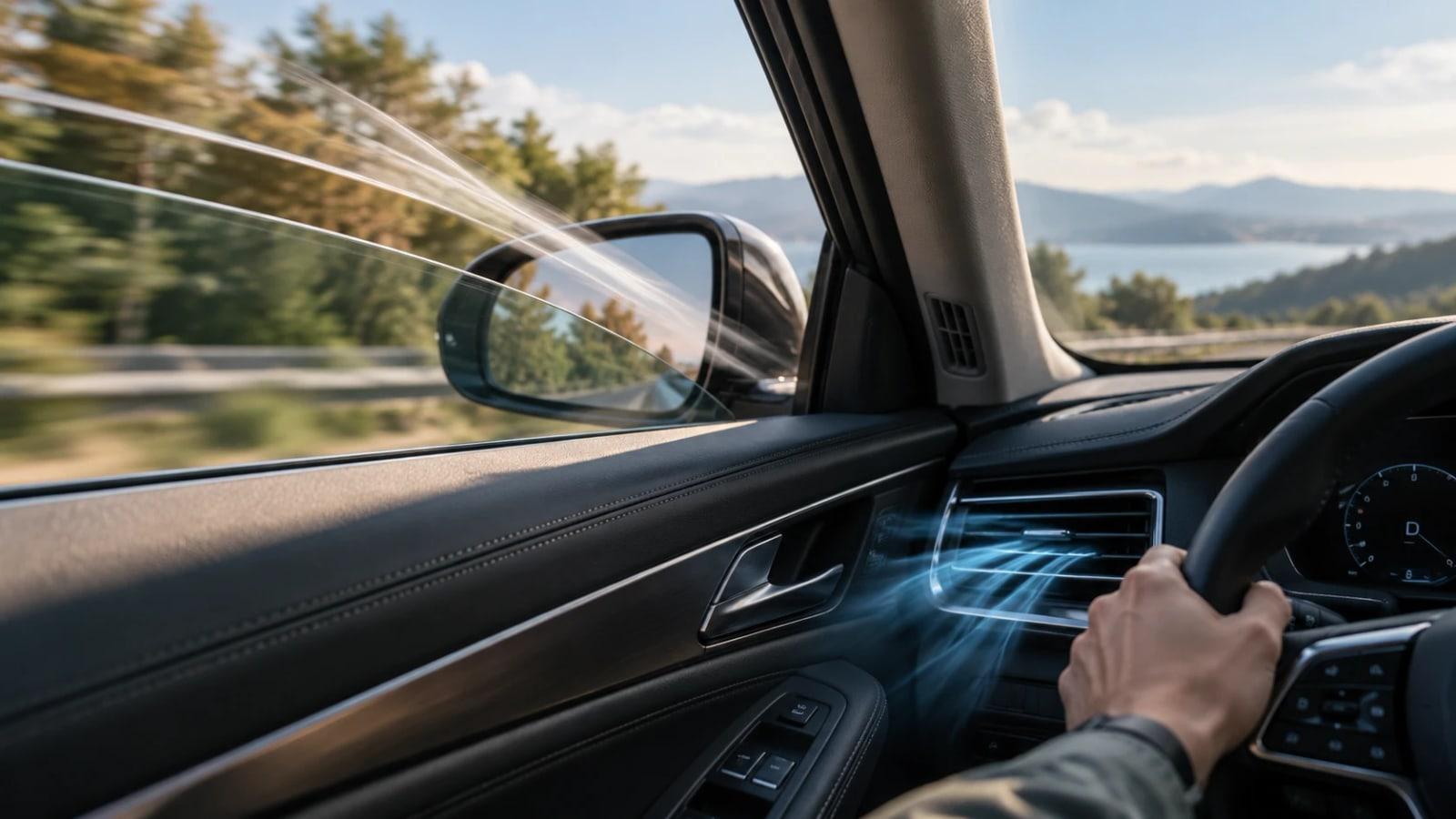
Even with the air conditioning running, many drivers open a window just a crack. What that small habit says about control, comfort and sensory feedback, and what it means for automotive UX.
Many drivers have noticed a common habit: even with the air conditioning running, people often crack a car window just a little. On the surface this seems counterintuitive. Why let warm outside air in when you have cold air blasting? The answer lies in human psychology and sensory experience.
Cracking a window provides a subtle sensory reassurance: a gentle breeze or the distant sound of the road reminds us that the outside world is still there. It gives the driver a way to verify the environment. As one study notes, people “often open windows to increase the sensory quality of indoor air…[so] a reminder of their ability to perceive positive or negative odors may lead to feeling less vulnerable” about air quality. In other words, feeling a faint wind on your skin or hearing traffic noise can make the environment feel safer and fresher, even if the AC alone would do the job.
During the COVID-19 pandemic, for example, public health guidance advised opening car windows to improve ventilation. Researchers found that “opening all the windows…[and] fresh air through the vents…is thought to create the best in-cabin environment to reduce the risk of transmission.” So part of the habit may come from a belief that outside air is healthier or that it reduces stuffiness. The simple physical act of opening a window engages our senses and provides comfort beyond what a sealed climate system can offer.

Perception of Control and Reassurance
Another factor is perceived control. Human beings naturally seek to feel in command of their surroundings. In cars, pushing buttons or turning knobs to adjust the climate is one thing, but cracking a window is a direct, tactile action the driver can take. Psychology research describes this as the illusion of control: by doing something (even something trivial), we gain a sense of safety. As the Interaction Design Foundation explains, when people believe they have control over a situation, their “discomfort is temporarily diminished” and they feel “a sense of safety and peace.”
In other words, even if the AC is already cool, having a finger on the window switch, however slightly, tells the brain “I am taking action,” which is reassuring. Interestingly, formal studies have shown mixed results: in one train experiment, having actual control over heating made no difference in reported comfort. What mattered was simply that the temperature was right. But even if objective comfort doesn’t change, the subjective feeling of control does. In UX, designers often use this: progress bars and knobs give users the satisfaction of seeing something happen in real time. Cracking a window is a built-in “progress bar” for cabin air. It physically signals that you’re doing something about the air.
Habit and Familiar Comfort
Habit also plays a strong role. For many drivers, slightly opening the window is a long-ingrained routine, perhaps carried over from older cars with less sophisticated climate systems. Humans form habits for efficiency and comfort, and such routines often feel right even when we’re not consciously thinking about them. Familiar, habitual actions are associated with a greater sense of security and meaning in life.
In practical terms, the little ritual of tweaking the window might simply soothe an internal itch for control and normalcy. It becomes almost automatic: you get in the car, set the AC, and instinctively open the window a crack, even if you never planned to. The habit is reinforced over years of driving, especially for people who grew up before automatic climate control was everywhere. In short, the act itself becomes comforting.
Implications for Automotive UX and Product Design
This behaviour reveals deeper user needs that car designers should take seriously.
Users want tangible feedback. Even in high-tech vehicles, drivers often prefer physical controls (knobs, sliders, vents) over purely digital ones, because the physical action itself is meaningful. Studies of real drivers show that at higher speeds (above roughly 30 km/h) people simplify their use of climate controls and rely more on automatic settings, while at city speeds they fiddle more: opening windows, adjusting vents. That suggests a guideline: keep frequently used controls within easy reach, and let less common or automated functions sit further back. Put manual vent switches and fresh-air selectors within reach for city driving, and let “Auto” take over on the highway.
Give the sensory reassurance people look for. A ventilation system could show an outside-air-quality indicator on the dashboard, or a small airflow animation when a vent setting changes, so the driver sees and trusts that fresh air is coming in. Some modern cars include ionising filters or scent diffusers to mimic a fresh breeze, which quietly acknowledges that drivers want the air to feel good. If designers want to discourage window-cracking (for efficiency or pollution reasons), they can offer alternatives, like an easy “fresh air” button with outside-air intake that mimics a slightly open window. If they embrace the behaviour, they could build it in: a “tiny crack” mode that vents quietly in warm weather, or a gentle dash-fan breeze that feels more natural than an AC blast. Users value control and sensory feedback, so interfaces that offer either one, even as an illusion, improve satisfaction.
Balance the habit against its costs. Many drivers underestimate how much even a small open window affects fuel economy and comfort. Real-time fuel or range indicators could gently discourage high-speed window-cracking by showing the drag penalty. Smart glass that vents just a crack while the AC runs could satisfy both needs. The point is to acknowledge the human tendency rather than ignore it: understand why people do it, then either accommodate the need or steer the behaviour without frustrating the user.
Potential Advantages and Drawbacks
Understanding the habit also means weighing its pros and cons:
- Comfort and a fresh-air feel. A slightly open window can make the cabin feel less stale. Drivers often say occasional outside air feels more natural and helps against nausea or fatigue. Improving the sensory quality of the air (through smell and feel) makes people feel safer about it.
- Perceived safety and awareness. A cracked window adds sound and airflow cues: you hear traffic, feel the air, and feel more connected to your surroundings. That can improve vigilance (cars, sirens, weather) and even reduce anxiety.
- Quick climate adjustment. In stop-and-go traffic or tunnels, opening the window briefly can equalise temperature or clear fumes faster than waiting for the AC to react.
- Fuel and energy. An open window adds aerodynamic drag. Oak Ridge research found that at common road speeds (40 to 70 mph), driving with the AC on used more fuel than driving with the windows down, up to 50% more at 60 mph. Above roughly 75 mph, the drag from an open window outweighs the AC load. Either way, the car works harder, which costs fuel or EV range.
- Noise. A partly open window lets in wind and road noise, which is tiring on long trips, and at high speed it can cause buffeting inside the car.
- Pollution and allergens. In heavy traffic, an open window sharply increases exposure to outside pollutants. One multi-city study found up to 80% higher in-cabin particulate exposure with windows down than with AC on recirculation. Pollen, exhaust and dust get in more easily too.
In practice, at low speeds the comfort benefit of a cracked window may outweigh the small fuel penalty, while at highway speeds it’s usually better to keep the windows closed. A thoughtful in-car UX could even notice when efficiency matters most (uphill, high speed) and suggest closing the window with a soft, non-intrusive hint.
Conclusion
The simple act of cracking a car window with the AC on says a lot about human nature. It’s a small ritual that gives reassurance, connection and a sense of control. It satisfies our need to engage the senses and act on our immediate environment. For designers, it shows that even in automated systems, people still want tangible interactions. Better fresh-air modes, visible airflow indicators or smarter cabin design can all meet the same need. Even minor behaviours carry valuable insights: by understanding why drivers crack a window, we can design cars that feel both efficient and comfortingly human.
Whether it’s a pet gazing through a nearly closed window or a driver opening theirs for no logical reason, habits are born in the smallest actions. In UX, automotive or digital, it’s rarely about what makes sense. It’s about what feels right.
Design isn’t just about usability. It’s about empathy, anticipation, and noticing the invisible behaviours that shape how people want to interact. So next time you see someone open their window just a crack, ask yourself not why they did it, but what they needed to feel in that moment.
Stay curious, observe the small stuff, and keep building better experiences.
Rostislav
Originally published on Medium.