One Page First: The Brief We Agree Before We Design Anything
Article by PixelA
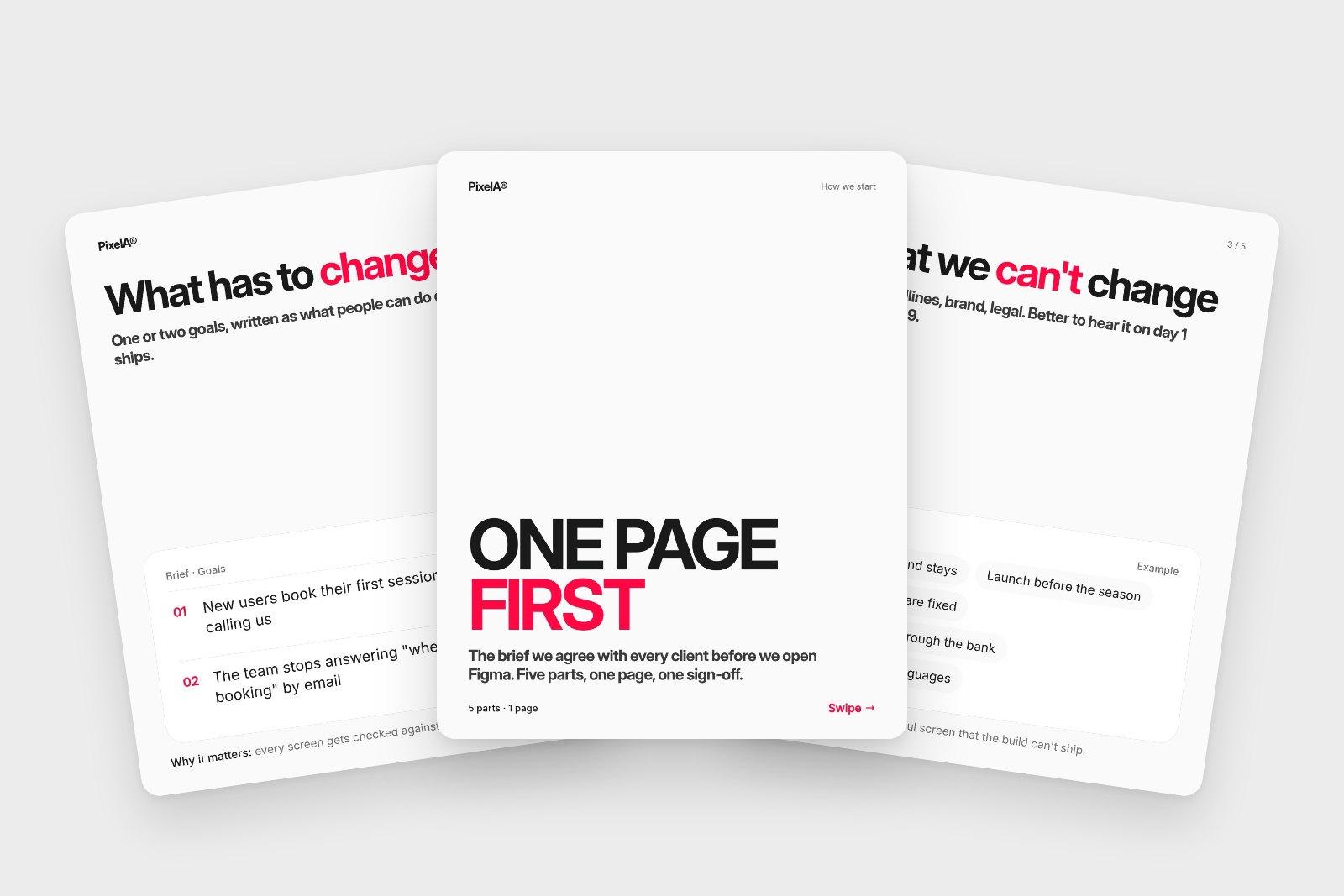
Before we open Figma, we write one page. Every project starts with a short brief that we and the client sign off on. Here are its five parts, and why the shortest one saves the most arguments.
Before we open Figma, we write one page. Every project starts with a short brief that we and the client sign off on, and it has five parts.
01 / 08
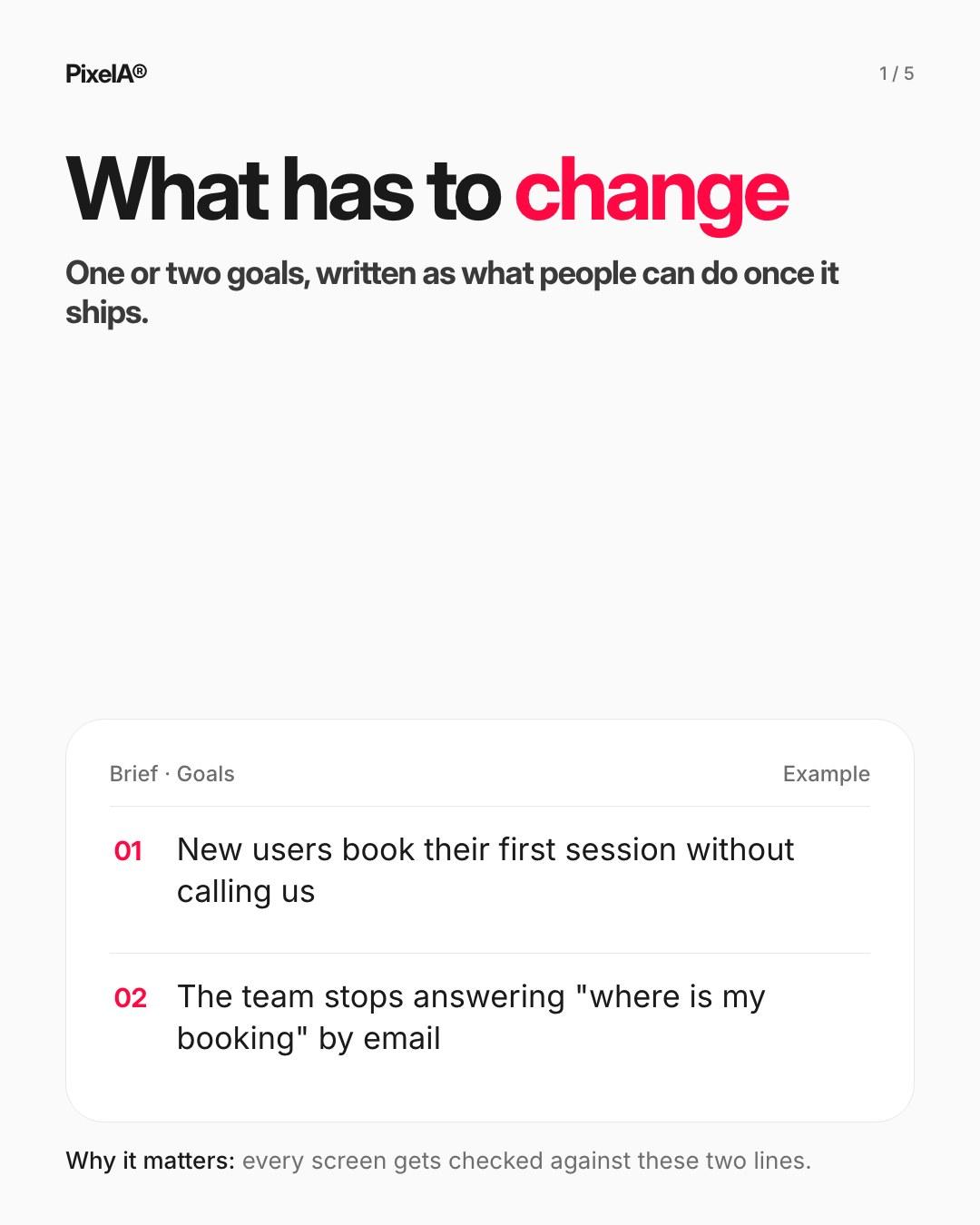
1. What has to change
One or two goals, written as what people can do once it ships. "Book a group in under two minutes" is a goal. "A modern look" is not.
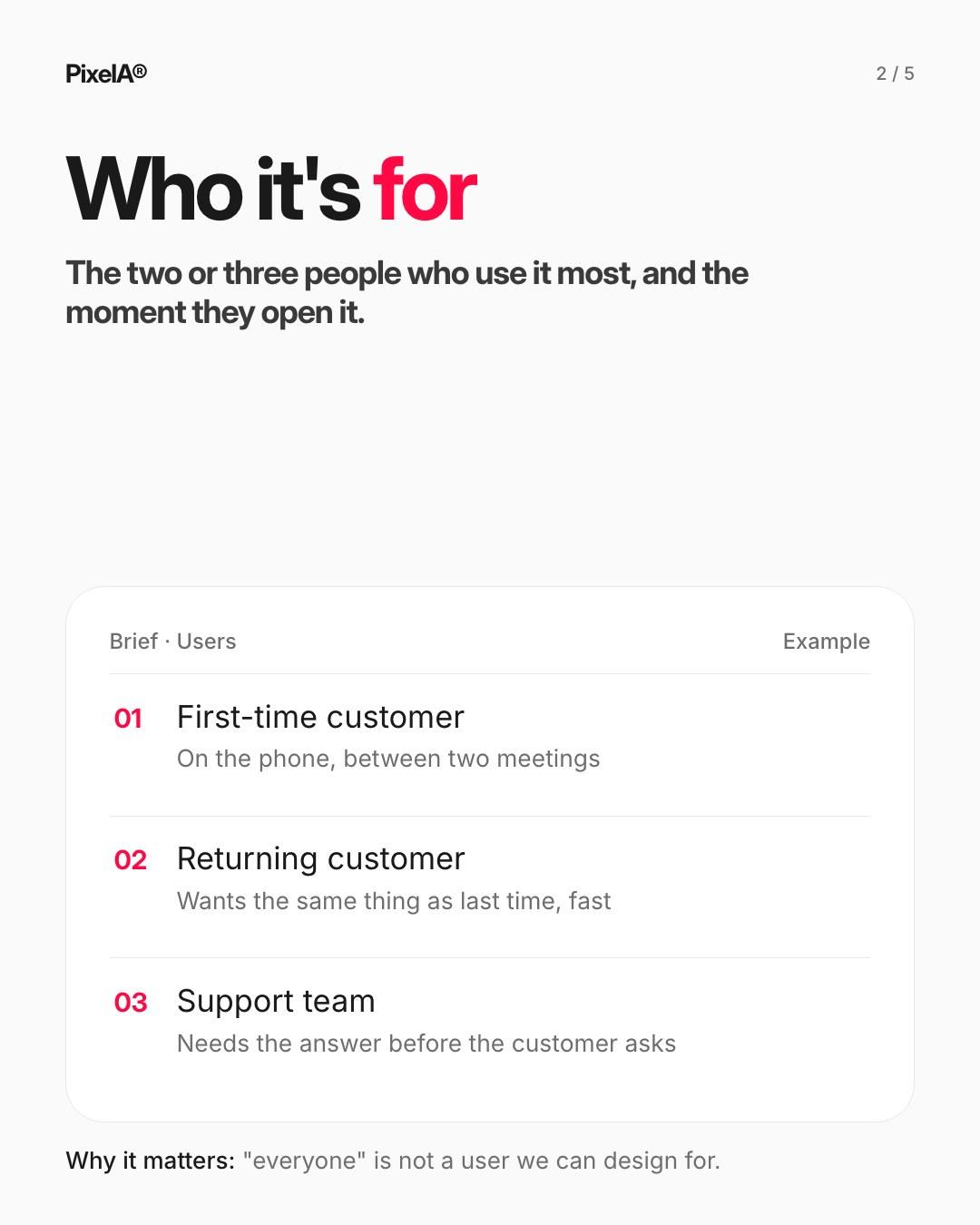
2. Who it's for
The two or three people who use it most, and the moment they open it. A recruiter between meetings and a developer on a weekend need different things from the same page.
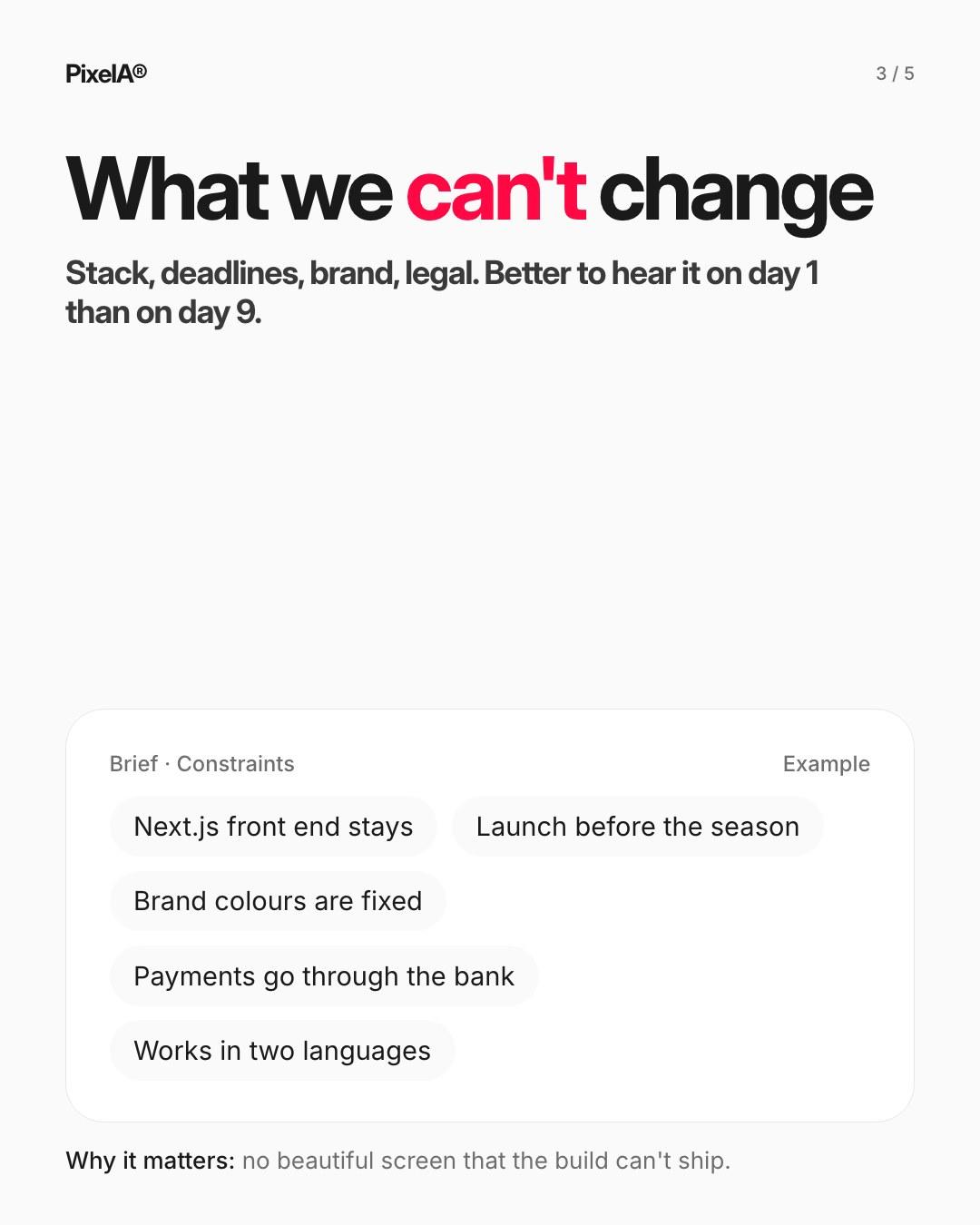
3. What we can't change
Stack, deadlines, brand, legal. Better on day 1 than day 9, when a design has already been built on top of the wrong assumption.
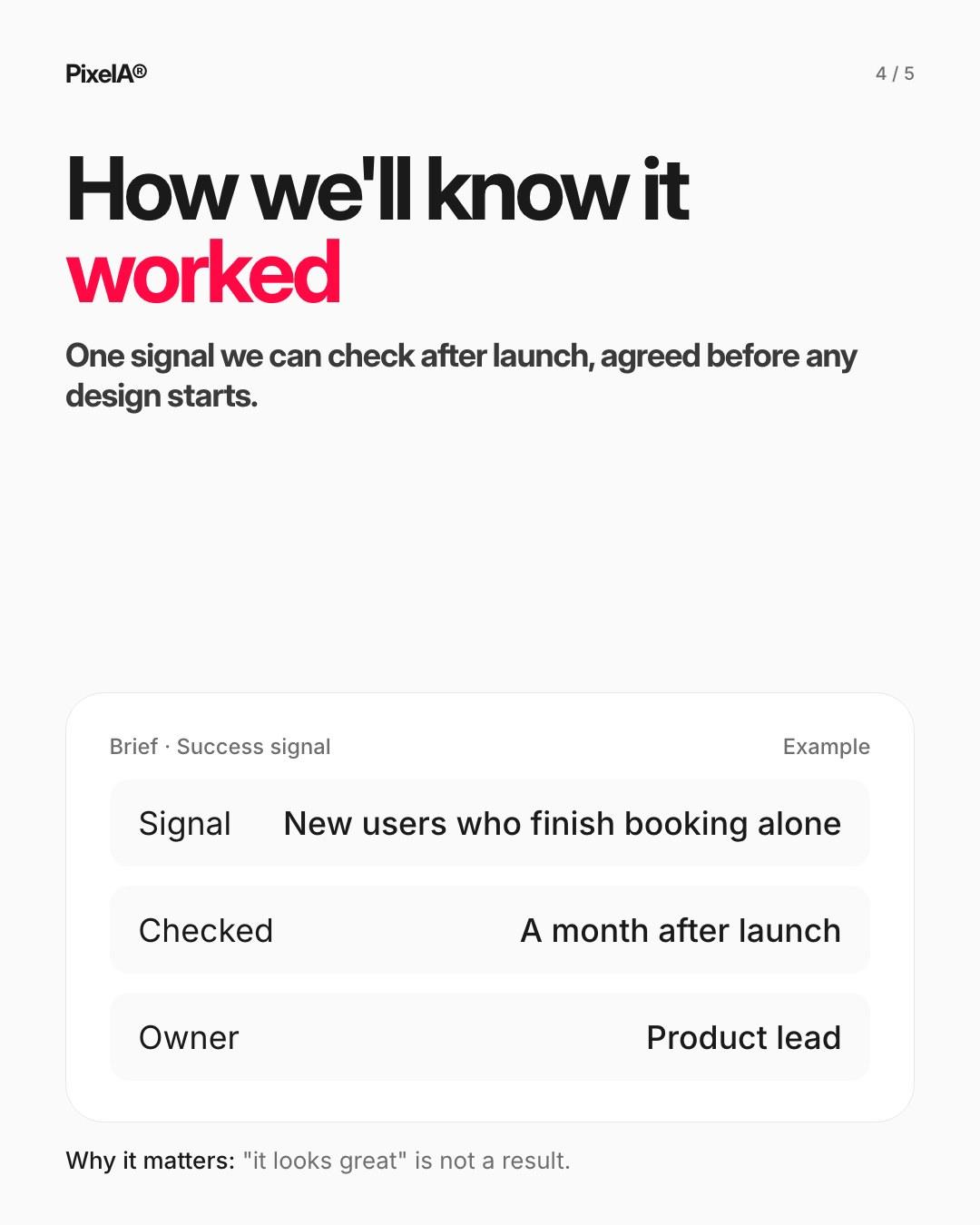
4. How we'll know it worked
One signal we can check after launch. One is enough, as long as everyone agrees on it before the work starts.
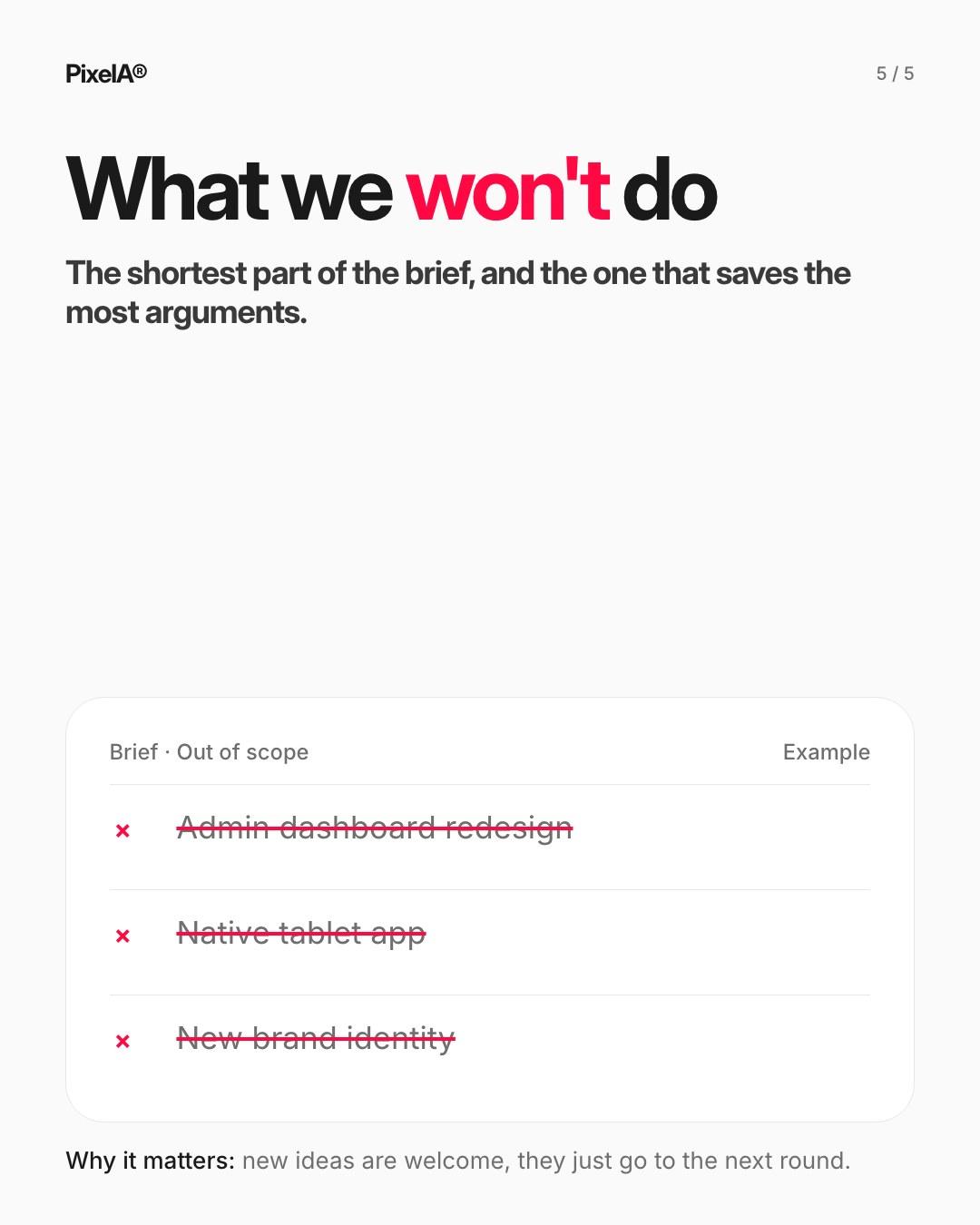
5. What we won't do
The shortest part, and the one that saves the most arguments. Writing down what is out of scope keeps the project the size everyone agreed to.
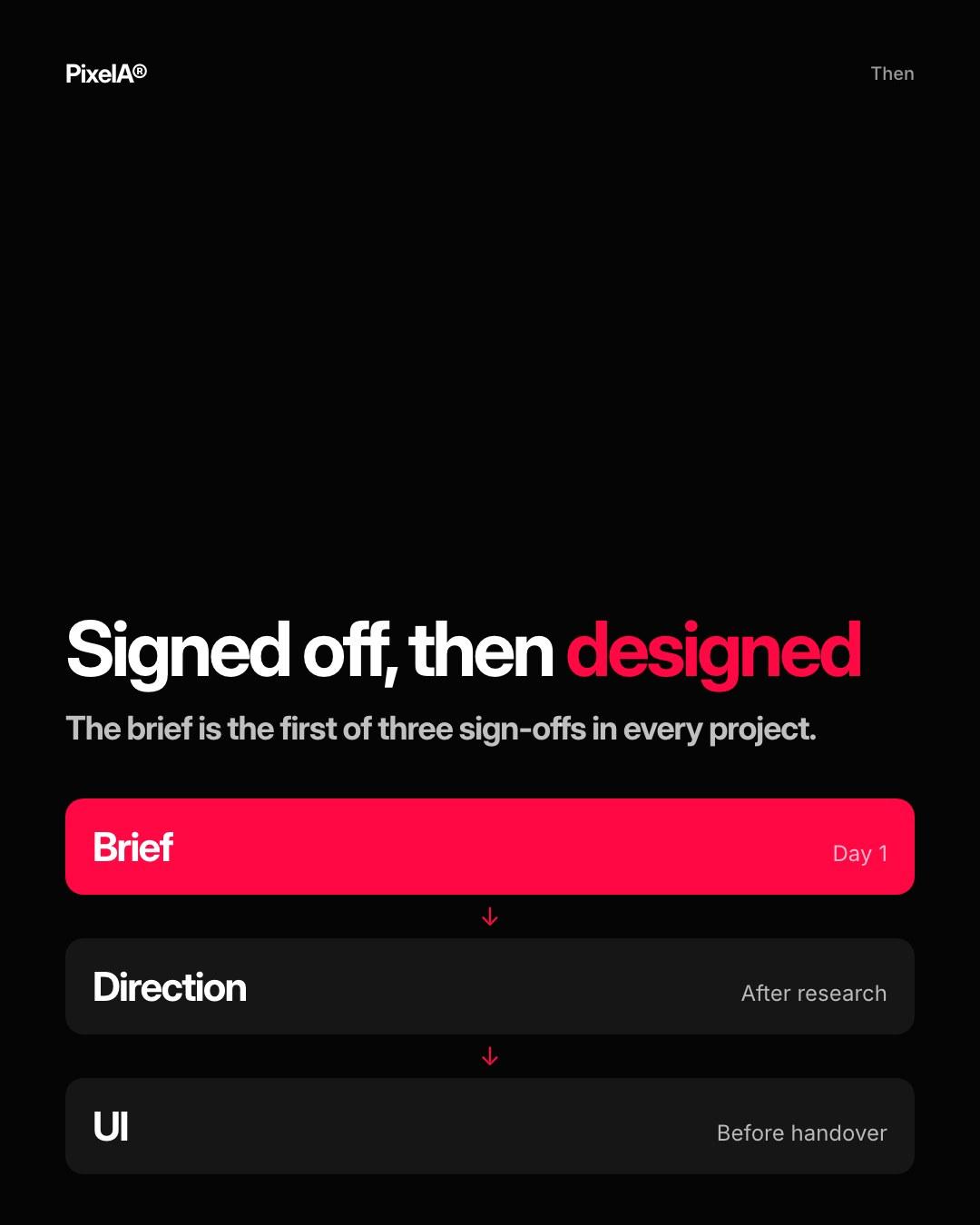
The first of three sign-offs
The brief is signed off before direction and before UI. Each step builds on one the client has already agreed to, so there are no surprises in the final review.
We share one of these breakdowns every week on LinkedIn. Want them in your inbox instead? Subscribe at the bottom of the page.